T Minus 2711/4/2019 What is EEG? So how do we measure cognitive fatigue with electroencephalography (EEG, or "brain waves")? Let's start with what EEG is and over the next couple of posts I will walk you through what we are actually doing. Your brain is mostly comprised of a couple of billion neurons - tiny cells that when activated send a small electrical signal called an action potential out at a means of communication. 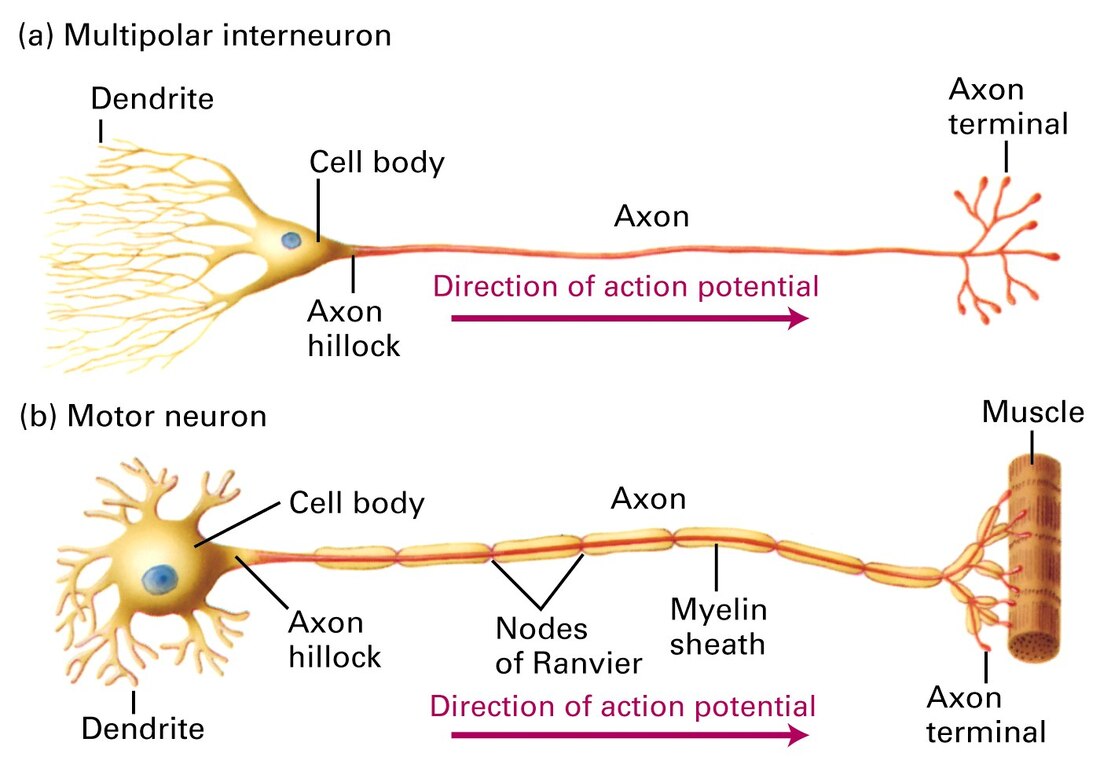 When the action potential reaches muscle for instance, it causes the muscle to contract which is how we move. However, within the brain most of the neurons are connected to other neurons forming a network that when active, is how your brain functions. Think of it this way, all of the neural connections in the brain are like the tiny electrical connections within a computer - and patterns of electrical activity within this network are how your brain computes or processes information. Think of it this way, a single neuron by itself is either on or off. But eight neurons working together using binary representation can represent all of the numbers between 0 and 255. So the billions of neurons in the brain - can represent anything. The same is true for computational operations - different patterns of on and off allow the brain to process information.
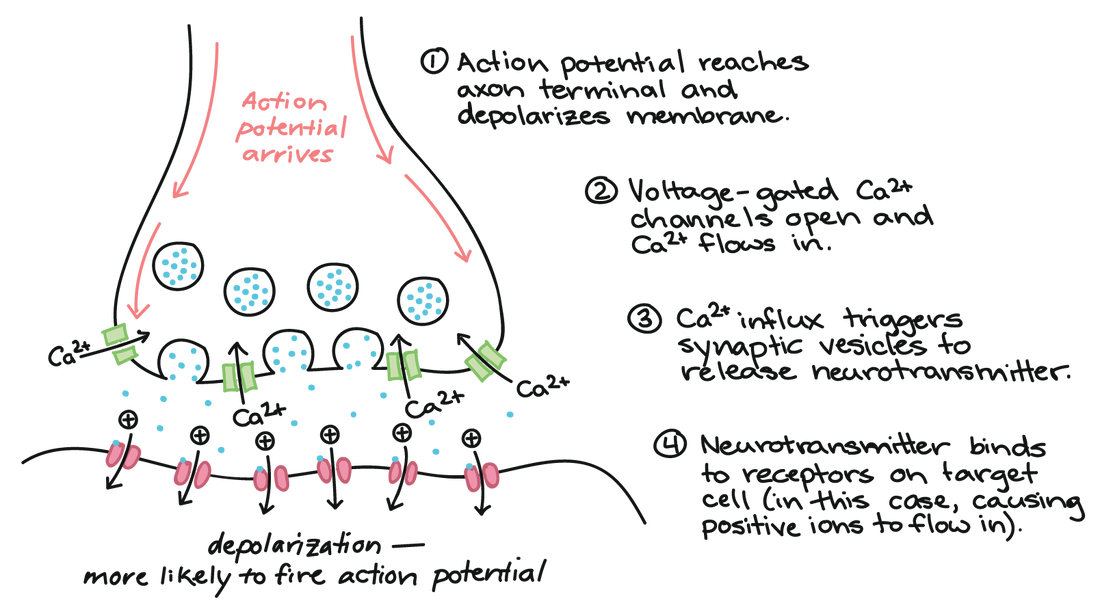
So, your brain is mostly comprised of neurons that communicate with each other. And that communication is electrical in nature - the action potentials that I talked about. However, EEG does not actually measure action potentials. What EEG measures is what happens when action potentials arrive at the synapse. When an action potential arrives at the axon terminal it causes neurotransmitter to be released. The neurotransmitter crosses the gap between the axon of a pre-synaptic neuron and the dendrite of a post-synaptic neuron and binds. When it binds it generates another electrical signal - an excitatory or an inhibitory post-synaptic potential. 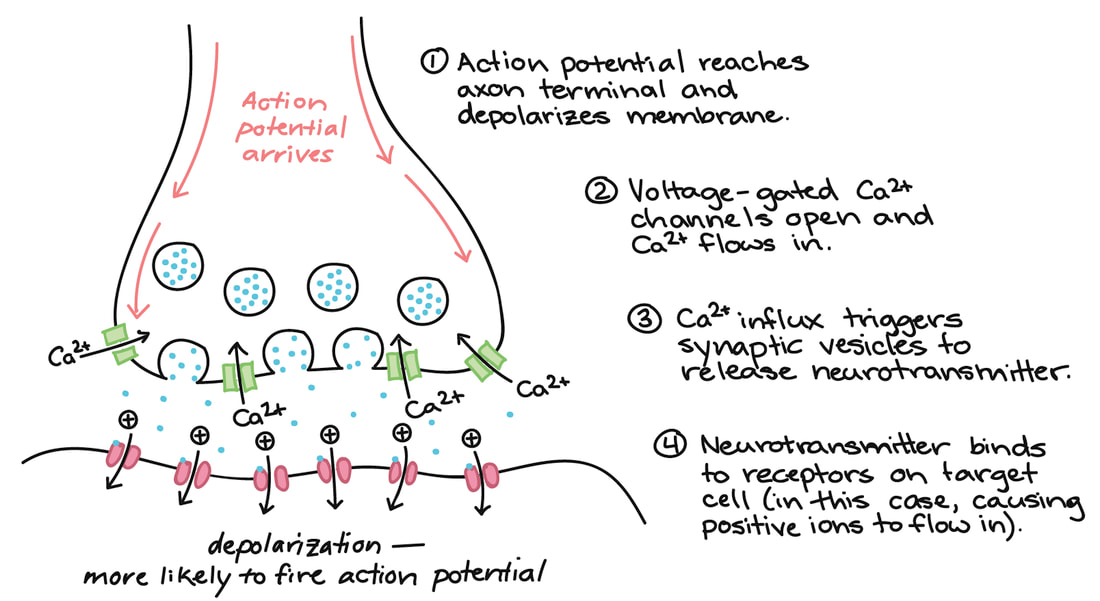 And that is what EEG measures - a whole bunch of these excitatory or inhibitory post synaptic potentials occurring at the same time - by simply placing an electrode on the surface of the scalp. 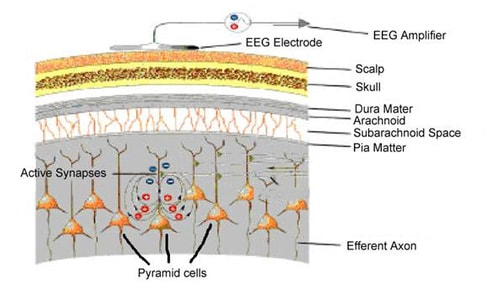 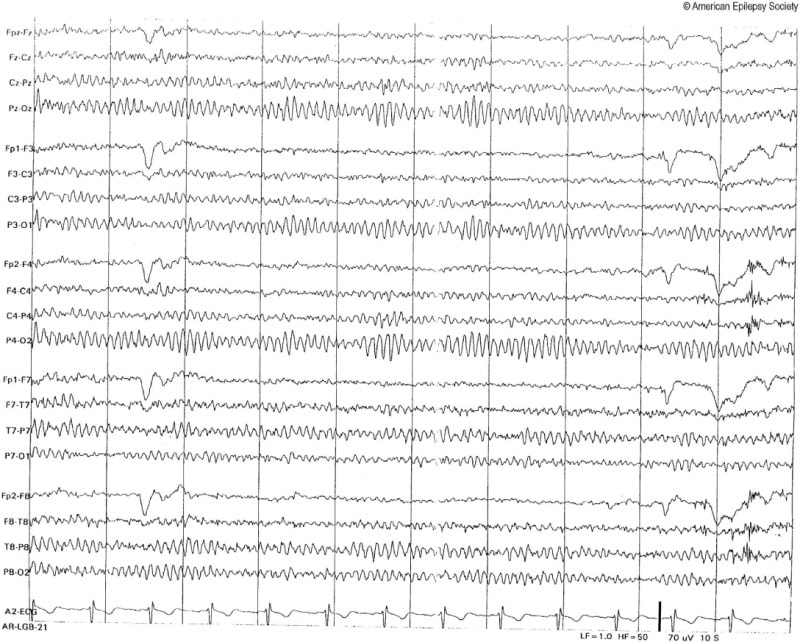 |
AuthorDr. Olav Krigolson is the Associate Director for the Centre for Biomedical Research, an Associate Professor in Neuroscience, and the Principle Investigator of the Theoretical and Applied Neuroscience Laboratory at the University of Victoria. ArchivesCategories |

 RSS Feed