T Minus 2011/11/2019 Cognitive Systems: Perception Over the next few blog posts I will be discussing the five aspects of cognitive brain function that we will be measuring via EEG, the first is Perception. What is perception? Perception is essentially your ability to interpret sensory information (sight, sound, hearing, taste, touch) into something meaningful. For example, your ability to process visual information and recognize an object as a car. Perception is an important aspect of cognitive function because without it, we would have a really hard time interacting with the world around us. One way to study perception is to examine when it is "tricked". Consider the following optical illusion below. 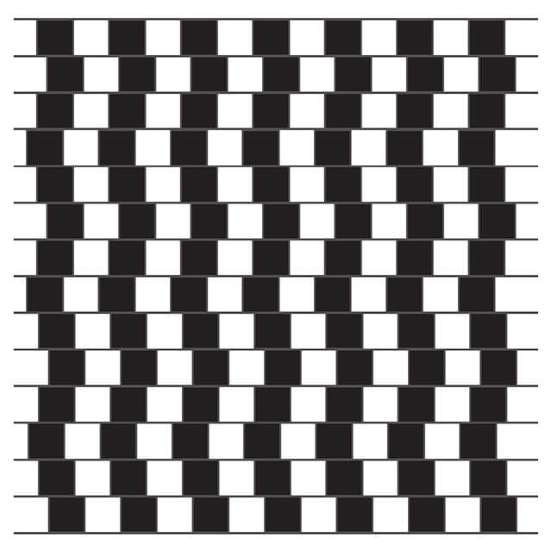 With the above image, the horizontal lines are actually perpendicular but your perception is that they are not. This is what our perceptual system does - it interprets sensory information and tries to draw meaning from it. In this case, the meaning is wrong but you get the idea. A classic information processing model shows where perception fits into cognitive processing. 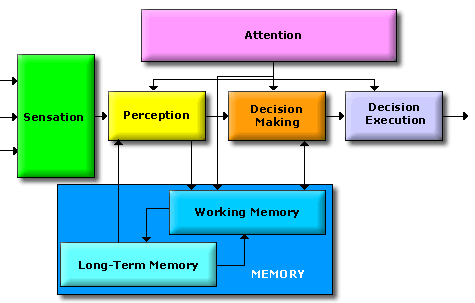 We are interested in perception as the EEG signatures of sensory processing are reduced when one is cognitively fatigued. Further, given the importance of perception in cognitive processing we also examine to see the impact of other factors such as sleep, exercise, diet, etc.
|
AuthorDr. Olav Krigolson is the Associate Director for the Centre for Biomedical Research, an Associate Professor in Neuroscience, and the Principle Investigator of the Theoretical and Applied Neuroscience Laboratory at the University of Victoria. ArchivesCategories |
 RSS Feed